AI Ex Girlfriend Roleplay Apology: Leave Space
Give one fictional apology a specific action to acknowledge. Leave forgiveness, another meeting and getting back together as three separate choices.
On this page
An apology can open a reunion without settling it. The interesting part is the response you have not written yet. Instead of asking the character to forgive everything immediately, choose one small piece of unfinished business that can be discussed in the present.
- Invent the people and the mistake; do not replay a real person's private messages.
- Name an action rather than writing a speech about being a terrible person.
- Offer a repair that can happen in this scene.
- Leave acceptance and future contact undecided.
Choose the action worth acknowledging
For a manageable scene, use a missed event, an unreturned object or a decision made without discussing it. “I said I would come to your exhibition and did not tell you I could not make it” gives both fictional adults something precise to discuss. “I ruined everything” leaves the character to invent the actual problem.
Keep the consequence equally specific. The exhibition went ahead, the other person waited for a message, and there was an uncomfortable silence afterward. You do not need to assert that the mistake destroyed her confidence or secretly caused the breakup. Those interpretations can be offered by the character if the story establishes them.
Write an apology that does not demand an answer
Authored setup: “We are two fictional adults, both 31. We dated, then separated amicably a year ago. Near the end of the relationship, I missed your small exhibition without telling you. Today we meet outside a new gallery show. We have time for a brief conversation, but neither of us has agreed to revisit the relationship.”
Authored opening: “I said I would come to your exhibition and then left you waiting for a message. I should have told you I could not make it. I'm sorry for that. I brought back the leaflet you lent me; would you like it, or would you rather I leave it with the desk?”
The wording names the failed action and makes a modest offer. Returning the leaflet is not compensation for every imagined hurt. It is a practical thing the speaker can do now. Keep the apology separate from an invitation to dinner so each decision can receive its own answer.
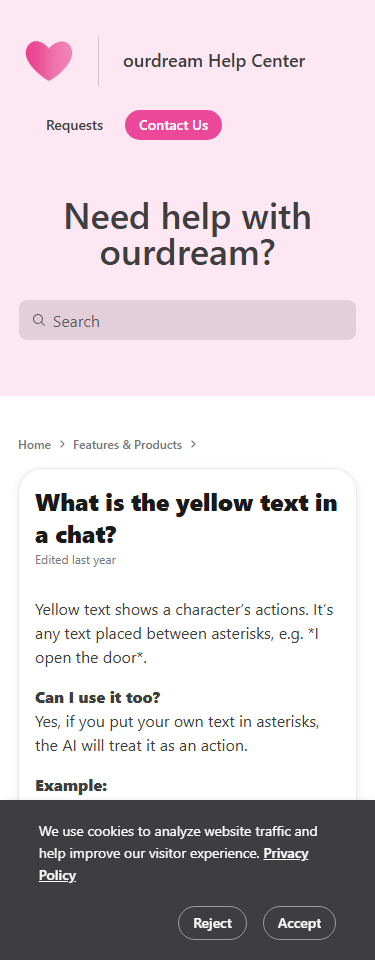
An apology does not need a gesture that demands forgiveness. The leaflet can stay on the table while the speaker owns the missed exhibition. If you add *I place the leaflet beside my cup*, use it only to locate the object. OurDream's action-format instructions describe the asterisks; source checked October 11, 2026. Nothing in that formatting rule determines the other character's reply.
Source screenshot
Use the invented shared-past guide if the basic history is still unclear. This article begins after that setup decision: it asks what the apology acknowledges and what remains for the other participant to choose.
Separate three possible next steps
A reply may accept the apology while declining another conversation. It may ask for an explanation without offering forgiveness. It may leave the matter open and return to the practical task. Respond to the choice actually expressed; do not treat a courteous answer as agreement to get back together.
You can leave a second meeting undecided with an ordinary line: “Thank you for hearing me. I won't make another plan for us tonight.” If the character asks to continue, choose whether your fictional participant accepts. There is no requirement to make all three outcomes happen in one exchange.
Avoid attaching a bargain to the apology: “I said sorry, so you owe me a chance.” That removes the decision the scene was meant to create. If you want conflict, let the characters disagree about what the apology means rather than making either person's response compulsory.
If the chat supplies forgiveness for you
Use one narrow correction: “In this fictional scene, the apology has been offered, but your response is still yours to choose. Please do not narrate that we have reconciled.” Then return to the practical question about the leaflet instead of adding another speech.
If the response invents several additional betrayals, return to the agreed event: “The unfinished issue here is the missed exhibition and the missing message. Keep other history unestablished.” A larger argument can become a different story, but it should be your decision to introduce it.
Find a compatible premise before continuing
The reunion situations offer other reasons for two fictional adults to meet. Read the public profile's own story before adding this gallery exercise. A first-meeting premise may suit another scene; choose one that leaves room for the shared history you want.
OurDream's public entry, reviewed October 11, 2026, shows Create and Explore navigation. Choose a story that interests you and introduce the small gallery premise yourself. The destination and shared-history guide explains how to keep your scene note ready for that next step.
Source screenshot

Basis: public-entry review dated October 11, 2026 and original adult fictional examples. These passages are not paid-chat transcripts or evidence of a real ex's feelings. The scene ends wherever you choose to leave the practical conversation.
Questions before you start
Can the apology end without forgiveness?
Yes. The other fictional character can decline, defer or acknowledge the apology without resolving the issue. That is a complete scene outcome.
Should the speaker explain why they missed the event?
Give the acknowledged action first. Add an explanation only if it helps the fictional conversation, and avoid using it to erase the consequence or demand acceptance.
Is a practical repair the same as getting back together?
No. Returning an object or correcting a small mistake does not establish a new relationship. Keep future contact as a separate choice.
What if a catalog profile has no ex-partner premise?
Read its description and decide whether to propose a different scene or choose another profile. The exercise does not rewrite the public character automatically.