AI Ex Girlfriend Reunion Exit Prompt
Choose what ends the encounter: a returned object, a postponed conversation or one agreed plan. None has to decide the whole relationship.
On this page
The record has been returned, the conversation has happened, and the train is arriving. That is enough to finish an encounter. If every goodbye launches another confession, decide which unfinished thing belongs to a future scene and which thing is simply done.
- Identify the practical purpose the encounter has completed.
- Choose goodbye, defer or one agreed next meeting.
- Write the final action without assigning the other person's emotions.
- Save only the outcome the dialogue actually established.
Find the scene's stopping point
Start with the encounter's task. Returning a record, asking a question or meeting briefly at a shared event creates a natural endpoint. An ending becomes harder to write when you have never decided what the characters came to do. Use the shared-past setup guide to establish the encounter before trying to close it.
Do not confuse an endpoint with solving every unresolved feeling. The two fictional adults may disagree about the past and still complete a practical exchange. Nor does the scene need a sudden new partner, emergency or hidden message to make it feel finished. Choose the change that actually occurred during the conversation.
Three endings for the same encounter
Original adult fictional premise: two adults, both 32, meet near a station after a year apart to return a borrowed record. They have spoken briefly and the record has changed hands. No new relationship has been agreed. Choose one of these writing options.
Complete goodbye: “The record is back with you, and I've said what I came to say. I'm going to catch my train. Thank you for meeting me.” Then ask the character to give its own final reply at the station without introducing another obstacle to leaving.
Deferred conversation: “I don't want to settle the rest while we're watching the departure board. Let's leave that question open tonight.” Do not attach a date unless the dialogue has agreed to one. This ending preserves uncertainty while completing the current meeting.
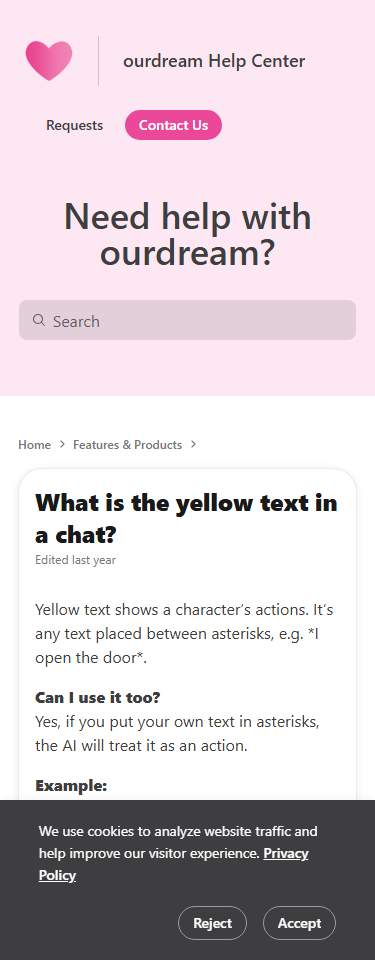
At the station, an action line can finish the practical exchange: *I pass the record over and step toward the platform.* This follows the action notation described in OurDream's official text-format help, checked against the public document October 11, 2026. The record changing hands completes the task. It does not establish another meeting or require the fictional ex to agree with your interpretation of the goodbye.
Source screenshot
Agreed next meeting: “We said Saturday afternoon at the café by the park. That's the only plan we're making tonight. I'll see you there.” Use this version only after both fictional participants have actually accepted that plan in the scene. An offered invitation is not an agreement.
Choose the ending from what happened
Use the complete goodbye when the practical task is done and you do not want to continue this particular encounter. Use a deferred conversation when a question remains open but the characters have not agreed to revisit it. Use a next meeting when a concrete plan has already been made. The distinction is observable in your own written story, rather than inferred from a tender sentence.
For another setting, the reunion scene ideas can supply a reason to meet. Read the starting character's premise before proposing your version. A busy workplace goodbye may need fewer words than a station meeting; the task still decides where the encounter ends.
When a goodbye turns into another scene
If the next reply introduces a confession, say which endpoint you want: “Keep the final reply at the station. The record is returned and my character is leaving for the train. Do not begin a new scene.” You can also stop reading or close the conversation. A model continuing to generate text does not oblige you to supply another turn.
If you like the new development, you may choose to continue, but treat that as a new editorial choice. Do not claim the original ending was established while simultaneously playing its continuation. Decide which version you intend to keep, then write a short note rather than carrying two contradictory endings.
Keep the next visit honest about the outcome
A useful note after a complete goodbye is simple: “The record was returned; they parted at the station; no future meeting was arranged.” After an agreed next meeting, record the place and time. Avoid “she secretly wants me back” unless the story explicitly established that interpretation.
The destination and history guide explains how to keep your note ready when you open a partner. Save it on your own device and introduce the fictional details you want to continue. A useful note says what happened, what remains open and whether a next meeting was accepted.
OurDream's public entry, checked October 11, 2026, shows Create and Explore navigation. Read a current character's story before adapting the station example. If you would rather begin something new, choose a different premise instead of writing a sequel you no longer want.
Source screenshot

Evidence basis: public entry reviewed October 11, 2026; all station passages are original adult fiction. No paid-chat ending or enforced stop control was tested. You can finish your session yourself even if a generated reply offers another scene.
Questions before you start
Can I end the encounter while the relationship stays unresolved?
Yes. Finish the task that brought the fictional adults together. Their future relationship can remain undecided without making the present scene incomplete.
Does a deferred conversation require another appointment?
No. A question left open is different from an agreement to meet again. Record an appointment only when it is actually accepted in the dialogue.
What if the AI ignores the exit instruction?
You can restate the ending once or finish your session yourself. This writing prompt is not an enforced stop control.
Should I keep both an ending and its alternate version?
You may save alternatives as writing notes, but label them as alternatives. Choose one accepted outcome before beginning a continuation.