
AI Ex Girlfriend Prompt: An Invented Shared Past
Give a fictional reunion a past without deciding its ending. Build a compact history, write one invitation, and repair contradictions without scripting both sides.

The awkward part of a reunion is often what neither person has said yet. If your opening already declares that you are forgiven, back together and perfectly understood, there is little left for the other character to answer. An AI ex girlfriend prompt can leave that uncertainty in the scene while keeping the shared past clear.
- Invent the people and their history; do not recreate a real ex from private messages or photographs.
- Separate what happened before the scene from what is being decided now.
- Make the first invitation small enough to accept or decline.
- Keep a brief continuity note containing established facts, not predicted feelings.
Method: public-document review checked October 2, 2026. The examples are original writing suggestions about fictional adults. They are not captured chatbot replies, an account test or a claim about any listed character’s biography.
Write a past that leaves something to discover
Give the reunion three firm anchors: how the characters knew each other, why contact ended and what brings them into the same place today. A separation caused by different plans can create a conversation without making either person a villain. You can leave the emotional interpretation open: one remembers the move as inevitable, while the other might see it as a choice.
Here is an authored setup to adapt: “We are two fictional adults, both 28. We dated while working in different cities and parted when neither wanted to relocate. We have not spoken for eighteen months. Today we meet at a community book sale to return a paperback. The reunion is polite but uncertain; neither has agreed to restart the relationship.”
That setup gives the exchange a shared object, a time gap and a practical purpose. The paperback is something they can talk about before the conversation becomes more personal. There is no need to supply a complete dating timeline. Extra details belong in your notes until they become relevant to the scene.
Put the question in the opening, not the answer
Try an invitation that refers to the invented situation: “There is a note you left in this book. Would you like it back, or should it stay with the story?” This is an authored first line, not an observed model response. It allows humor, a brief explanation or a quiet refusal. Each possibility gives you a different next turn.
Compare that with “You kept the book because you never stopped loving me.” The second sentence assigns a motive before the other character can speak. If that is the exact plot you want, you can write it as fiction; it simply leaves less room for a reunion that develops through dialogue. A practical editing check is to underline every claim about what the other character secretly thinks. Decide which ones are established backstory and which ones should remain questions.
Choose one of the existing reunion situations if you need a setting. The book-sale example here is a separate writing exercise; it does not change those scenes or assign their history to a provider’s public character.
Match the premise to the character you actually open
Read the profile’s own description before introducing your setup. A character written as a first meeting may not fit an ex-partner reunion. You can propose a different scene, but a message does not rewrite a public profile or guarantee the response. If the profile’s premise keeps pulling the chat elsewhere, choose a more compatible character or create an original one.
OurDream’s official character and memory page, checked October 2, 2026, describes creating characters from personality and backstory and retaining conversation details across days and weeks. Those are provider statements, not a measured recall score. They do not establish that every public character accepts a new reunion premise.
The destination and shared-history guide explains what happens after you leave this site. Choosing a reunion here does not send its history into a partner chat. Enter only the fictional details you want to share once you are inside the service.
Keep a continuity note with three separate lines
A useful note distinguishes the past from the latest exchange. Otherwise a possible ending can quietly turn into something the story treats as already settled. Save this note on your own device and update it only after the conversation establishes a change:
- Past: the fictional characters dated, separated eighteen months ago over incompatible relocation plans, and have not spoken since.
- Present: they have met at a book sale; a paperback has been returned; a coffee invitation has been offered but not accepted.
- Still open: whether to stay, discuss the separation or arrange another meeting. No reconciliation has been agreed.
The note is a writing aid, not a memory setting. You can paste a shorter version when needed, but the model may still misunderstand. Include the last actual scene event rather than a list of emotional predictions. “She agreed to sit down” is a different fact from “She wants a second chance.”
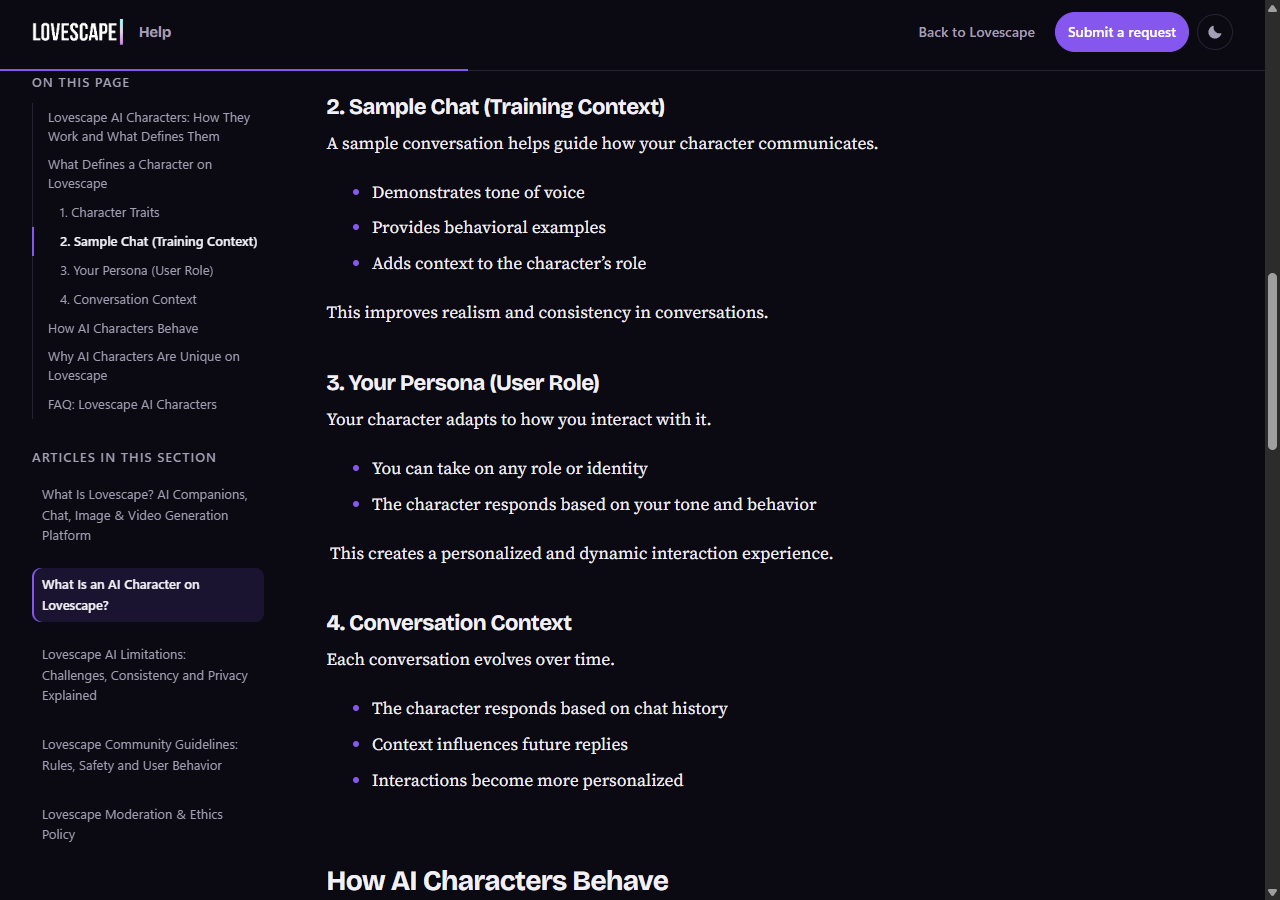
Lovescape’s character-context documentation, checked October 2, 2026, describes sample dialogue and prior messages as influences on a character’s replies. That supports writing a consistent premise; it does not prove every detail remains available.
Correct a contradiction without arguing with it
If a reply says the characters are married, correct that single fact: “Small continuity correction: in this fictional scene we dated and separated; we were never married. We are still at the book sale, before deciding whether to have coffee.” Then give the character a concrete next beat to answer. A long complaint about every mistake can overwhelm the scene you were trying to preserve.
If the chat decides your action, name the unmade choice: “Please leave my answer to me. You offered coffee, but I have not accepted yet.” If it leaps to a reunion, return to the present agreement: “We are only discussing what happened so far. Keep getting back together undecided.” These are authored correction suggestions, with no promise of compliance.
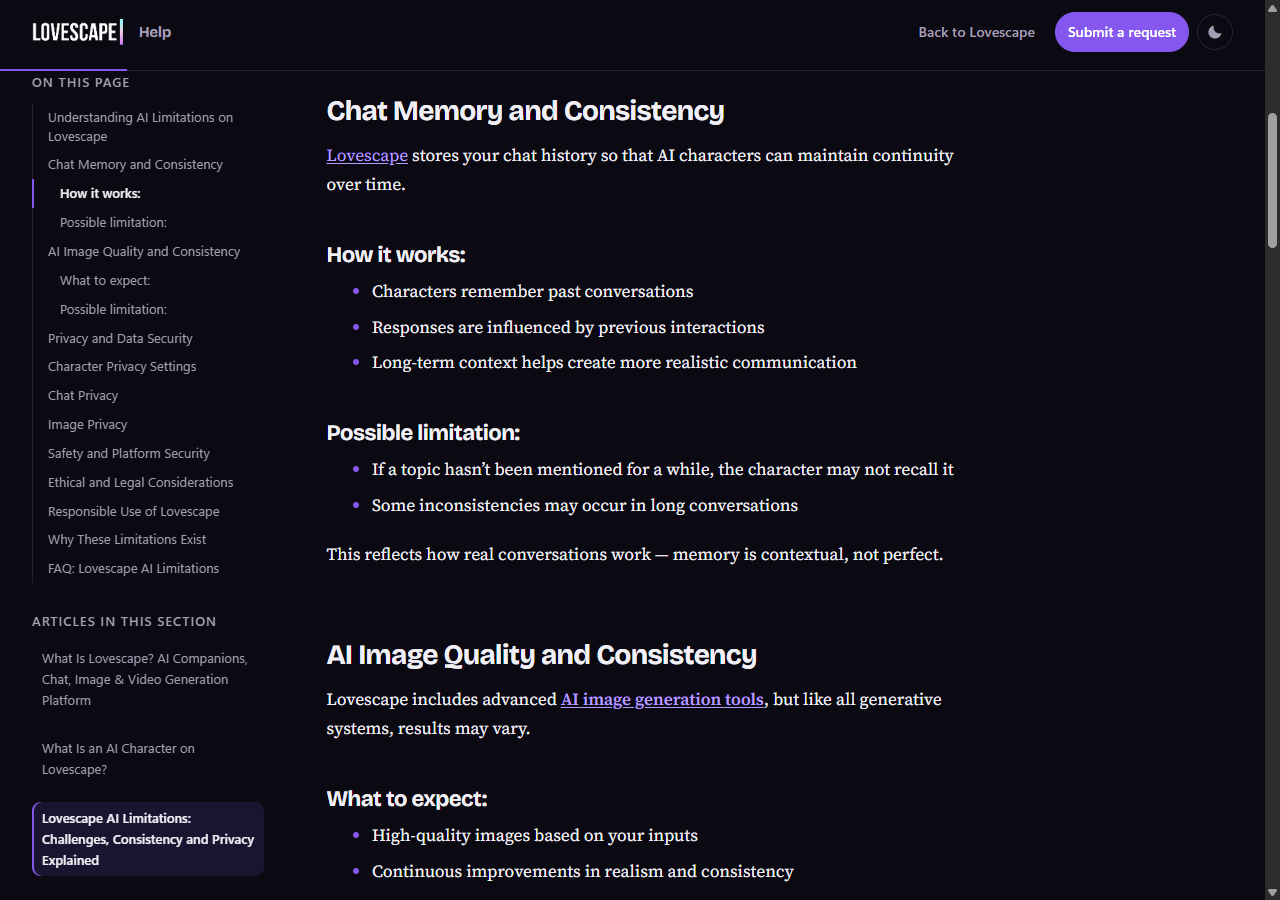
Lovescape’s official explanation of permanent memory, checked October 2, 2026, says history belongs to each character separately and is built from what you share. It also recommends correcting a misunderstood detail in conversation. This is a provider description, not proof that a correction will always stick. Maintaining the shared past can still take effort: choose a smaller scene if that upkeep stops being enjoyable, and skip this kind of chat if you need accurate insight into what a real former partner feels.
The public chat-continuity help page, checked October 2, 2026, also warns that an earlier topic can drop out of recall and an extended exchange can contradict itself. Your own note makes the intended scene easier to restate; it is not evidence of perfect memory.
End the encounter before deciding the whole relationship
A reunion can finish with a returned book, an honest explanation or a courteous goodbye. It does not need a dramatic confession to feel complete. If you continue another day, carry forward the choice that was actually made and keep the next question open. The point of the continuity note is to protect those small decisions, not to force a happy ending.
When you want a different starting point, use the adult character gallery to read supplied descriptions before choosing a profile. For a very specific invented history, a custom character may be a better fit than repeatedly asking an unrelated public character to become someone else.
Questions before you start
How much invented shared history should I put in the first message?
Include enough to explain the meeting: the former relationship, one reason it ended, and today’s purpose. Keep optional anecdotes in your own notes. Introduce a detail when the conversation needs it rather than sending a full fictional archive.
Can I write a reunion that does not end with getting back together?
Yes. Define the current encounter as a conversation or practical exchange and leave its outcome open. A polite goodbye, a declined invitation or a plan to speak later can each finish the scene.
What if the public character is not written as an ex-partner?
Treat your reunion as a proposed scene, not as a fact about that profile. If its established premise conflicts with your idea, choose another character or use a custom creator. A prompt alone does not guarantee that the public profile’s behavior changes.
Should I paste real messages from my ex to make the history convincing?
Use wholly invented people, events and wording for this exercise. A fictional shared object or disagreement is enough to create a scene. Private correspondence and another person’s identity are unnecessary, and generated dialogue cannot tell you what they actually think.
Does a continuity note guarantee that an AI remembers the reunion?
No. It records your intended story so you can restate a missed detail. Provider memory claims do not establish perfect recall. If a detail matters, check the reply and offer a concise correction rather than assuming it was retained.